Projects Past: The 2009 Automatic Cat Feeder
In 2009 I took a week off from work to build an Automatic Cat Feeder to ration food to the overweight household cat. This was a project built from need and it had a deadline because my girlfriend and I were heading out of town for Thanksgiving.
The requirements were simple: It needed to be easy to refill and dispense the correct amount of food twice daily. Early on I had an idea for a large rotating drum to dispense the food, it needed to be easily removable for refilling and heavy enough that it could sit on a motorized wheel and cause enough friction to be turned.
Figuring out a latch mechanism that dropped the correct quantity of food after one rotation was the first tricky part. I didn't want any electronics on the drum so it had to be completely mechanical. In the end I hot glued a small box to the outside of the drum which filled during rotation, when it started moving back towards the top a tab would be hit to fling a door open and drop the food out. A magnet held the door shut and gravity would shut the door when the box made it back to the top. I'm extremely proud of this mechanism and it worked perfectly.
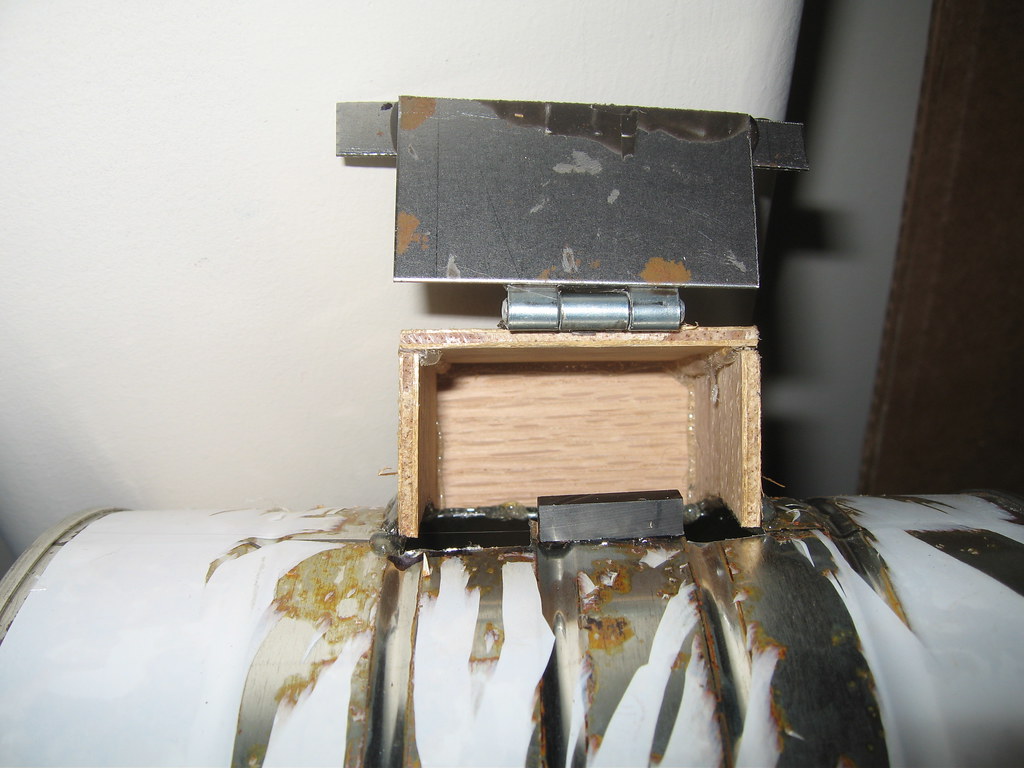 |
| The dispenser mechanism! A marvel of engineering, hot glue, magnets and JB Quick Weld. |
With all the details figured out, hacking it together turned out to be pretty easy. The hardware store patiently cut a sheet of 1/4" MDF into pieces for me which formed the box, and I was able to glue the pieces together with gorilla glue. A small stepper motor and some electronics were harvested from a 5 1/4" floppy drive and I was able to control it with an arduino. The program couldn't have been more than 50 lines, I figured out how many steps it took for 1 revolution of the drum through trial and error. Then coded it to do that every 12 hours.
 |
| The finished product. Seriously, we used it looking like this for several years. |
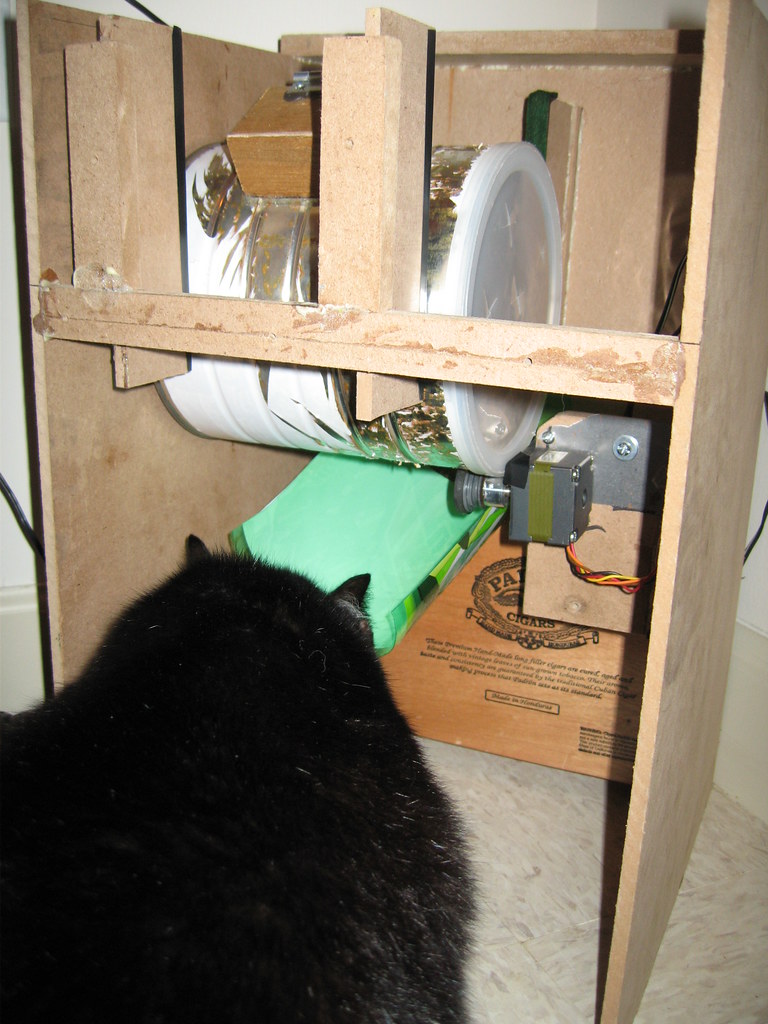 |
| The happy customer. My wife added a chute made from a mountain dew bottle. |
I did make a couple upgrades after these shots were taken. The stepper motor died so I upgraded to sparkfun's cheapest stepper and an EasyDriver stepper driver. I also added a reed switch to the box and put a magnet on the drum so that I didn't have to count steps, this was needed because depending on how much food was in the drum it would sometimes slip and require a different number of steps to get back to the top.

Cat treats can be a reward for good behavior, a way to clean your cat's teeth, or a supplement to their diet. Of all the cat treats we tested with our feline friends, the Grain Free cat treats are our top pick because they're made with real meat to satisfy your cat. Best grain free cat food
ReplyDelete